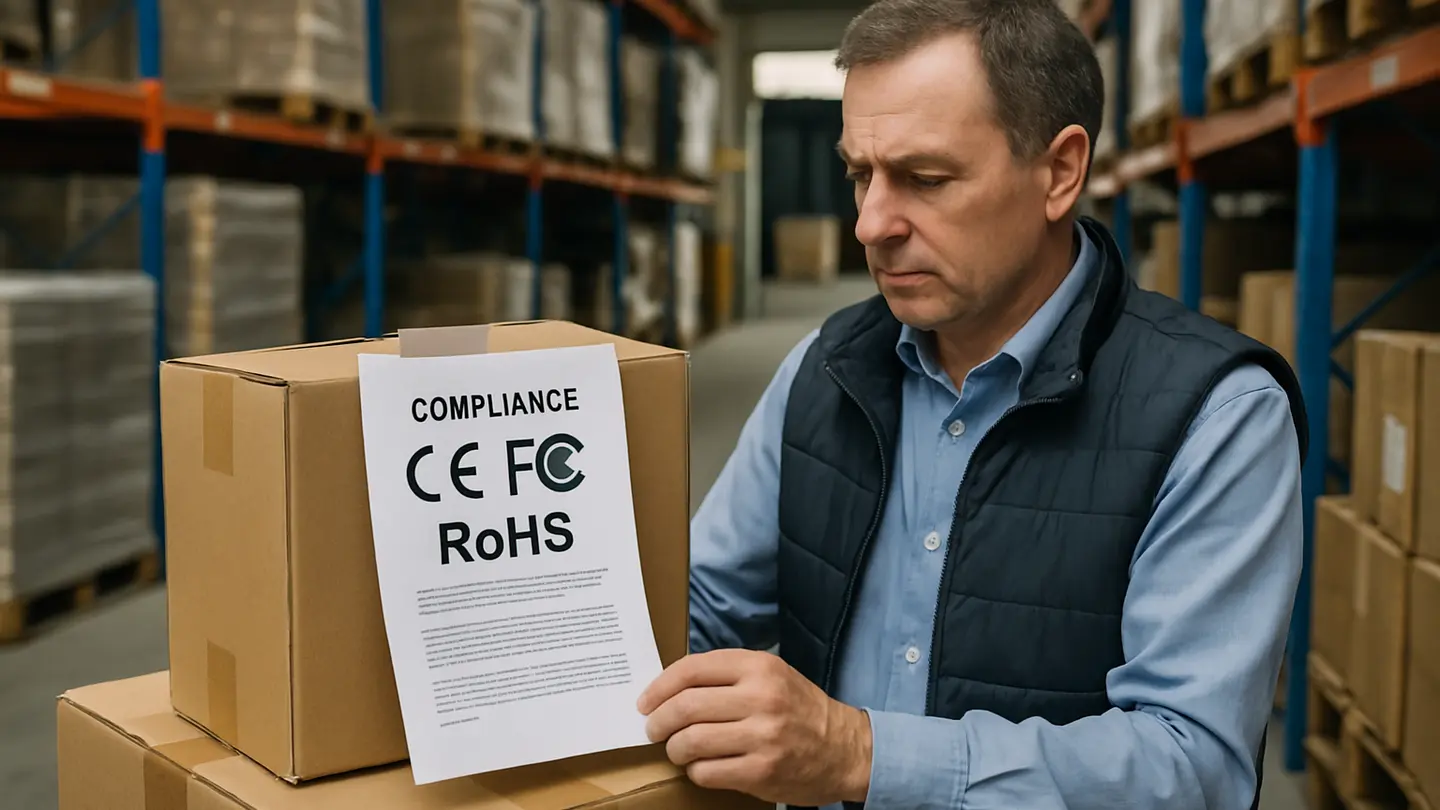
Weak supplier verification and limited visibility beyond tier-one factories can turn a documentation gap into a product recall, customs detention, payment dispute, or loss of market access. For a shower manufacturer, the risk may involve metal composition, coatings, plastics, packaging, labor practices, country-of-origin claims, or the use of undisclosed subcontractors.
Effective supply chain compliance risk management is not a one-time certificate collection exercise. It is a procurement operating system that connects regulatory requirements with supplier selection, factory audits, production records, shipment documents, corrective actions, and ongoing monitoring.
Seven Practical Steps for Managing Supply Chain Compliance Risk
The following seven steps create a connected control process:
- Define the regulatory scope and decision rules.
- Trace the multi-tier supply chain.
- Verify supplier identity, certificates, and capacity.
- Audit production, labor, and traceability controls.
- Align product and customs evidence with each market.
- Rate findings and manage corrective action.
- Monitor suppliers and prepare for customs inquiries or detention.
The process should begin before a purchase order is issued. It should also continue after goods arrive, because certificates expire, suppliers change production methods, and upstream material sources may shift without clear notice.
1. Set the Regulatory Scope and Audit Decision Rules
Before requesting quotations, define exactly what must be compliant. Start with the product range, destination markets, intended use, materials, finishes, packaging, and shipment lanes. A shower system sold for residential use may face different evidence requirements from a commercial or institutional installation, while the same product may need different labeling or documentation in different countries.
Create a risk map covering:
- Supplier and production site
- Country and region of manufacture
- Raw materials and critical components
- Product category and intended use
- Destination market
- Importer of record
- Shipping route and customs entry point
- Use of brokers, agents, subcontractors, or trading companies
Separate hard-stop violations from gaps that can reasonably be corrected. Certificate fraud, deliberate falsification, undisclosed production at another site, prohibited materials, sanctions concerns, or refusal to provide origin evidence may justify rejection or immediate escalation. A missing translation, an outdated internal procedure, or an incomplete training record may be suitable for conditional approval if the supplier provides a credible corrective action plan.
Set decision rules before the audit begins. For each requirement, specify:
- Required evidence
- Responsible internal owner
- Supplier deadline
- Review method
- Pass, conditional approval, or rejection outcome
- Escalation path if evidence is incomplete
This prevents commercial urgency from weakening compliance standards. Procurement should know when it may proceed, when legal or technical review is required, and when an order must be stopped.
2. Trace the Multi-Tier Supply Chain Before Requesting Certificates
A certificate from a tier-one supplier confirms only what the certificate actually covers. It may identify a factory, a management system, or a product process, but it does not automatically establish where the brass, stainless steel, plastic resin, ceramic cartridge, rubber seal, coating, or packaging material originated.
For each important product, connect the finished item to its raw inputs through a controlled bill of materials. Identify the parties involved in extracting, processing, forming, coating, assembling, storing, and shipping those inputs. Depending on the product and market, relevant upstream parties may include metal mills, foundries, plating facilities, plastic processors, component makers, brokers, and consolidation warehouses.
Request evidence that connects the material and the shipment, such as:
- Approved bills of materials
- Purchase orders
- Supplier invoices
- Material certificates
- Production and batch records
- Warehouse receipts
- Goods-received records
- Subcontractor declarations
- Packing lists
- Bills of lading or other shipping records
- Country-of-origin documentation
The records should be consistent in product descriptions, quantities, dates, entity names, lot numbers, and addresses. Ask suppliers to disclose every subcontractor involved in manufacturing, finishing, testing, packing, or storage. A factory that claims to produce all components in-house should be able to explain its machinery, staffing, process flow, and purchasing records.
Upstream documents may be issued in another language. Use accurate translations and retain the original files. Do not accept a summary that removes key details such as the legal entity, production location, material grade, or transaction date.
Commercial leverage is often necessary. Include sub-tier disclosure, record retention, audit access, and notification of material-source changes in supplier agreements. Tie continued orders, payment release, or volume allocation to the timely provision of credible provenance information.
3. Confirm Supplier Identity, Certificate Validity, and Production Capacity
Begin supplier verification with independent identity checks. Confirm the company’s legal name, registration status, ownership information where available, registered address, export capability, and stated business scope. Compare these details with the name shown on quotations, invoices, bank documents, certificates, test reports, and shipping records.
A trading company may be a legitimate commercial intermediary, but it should not be presented as the manufacturer unless it controls or accurately represents the production site. Record the legal relationship between the seller, factory, testing laboratory, and exporter.
Verify certificates directly with the issuing organization or a recognized accreditation database whenever possible. Check:
- Certificate number
- Legal entity
- Site address
- Scope of certification
- Covered products or processes
- Issue and expiry dates
- Suspended, withdrawn, or amended status
- Certification body and accreditation details
A valid certificate can still be irrelevant if it covers a different entity, address, product, or process. Match the certificate to the actual factory that will make the goods. If a certificate names a head office but production occurs elsewhere, obtain evidence showing whether the production site is included in the certificate scope.
Capacity claims also require physical validation. Compare the supplier’s stated output with:
- Number and type of machines
- Staffing levels and shifts
- Production cycle times
- Mold and tooling records
- Incoming material volumes
- Quality inspection records
- Warehouse capacity
- Recent shipment history
A factory that cannot produce the claimed volume may outsource work without disclosure or substitute materials to meet deadlines. Certificate fraud, undisclosed subcontracting, and unexplained provenance gaps should be treated as potential hard stops rather than ordinary paperwork deficiencies.
4. Audit Production, Labor, and Traceability Controls On Site
A useful on-site audit begins with an opening meeting. Confirm the scope, attendees, production lines, records to be reviewed, photography rules, worker-access arrangements, and expected closing process. Review documents before walking through the factory so that the physical inspection can test management’s statements.
During the audit, follow the material flow from receiving to shipment. For a shower manufacturer, this may include metal receipt, machining or forming, polishing, plating or coating, cartridge and seal assembly, leak testing, final inspection, packaging, and dispatch.
Inspect whether the factory can maintain product and material identity through each stage. Pay particular attention to:
- Lot and batch labeling
- Material segregation
- Rework and rejected goods
- Mixed production orders
- Chemical storage and usage records
- Maintenance logs
- Calibration records
- Test equipment
- Packaging controls
- Finished-goods identification
- Access to subcontractor records
Review labor and workplace conditions within the audit scope. Confirm that personnel records, working-hour controls, wage documentation, health and safety procedures, and legally required workplace measures are maintained where applicable. Interviews should be conducted appropriately and without management pressure.
Capture timestamped evidence and record the exact location, document reference, or production line associated with each finding. During the closing meeting, distinguish facts from assumptions. Ask the supplier to explain contradictions between management statements, records, and physical conditions.
For example, a factory may state that all plating is performed internally while transport records show repeated movement of unfinished goods to another facility. A production log may show output that exceeds the site’s available equipment. These inconsistencies can reveal hidden subcontracting or weak factory-floor controls.
5. Align Product, Chemical, Labeling, and Customs Evidence With the Market
Compliance evidence must relate to the goods actually being shipped. A test report for one finish, material formulation, or product revision does not automatically cover every variant. Match the approved bill of materials, tested sample, production lot, packaging artwork, and shipping documents.
For every destination market, create a product evidence file covering the requirements relevant to the item. Depending on the product and jurisdiction, this may include product safety, chemical restrictions, material declarations, labeling, installation information, packaging marks, traceability, and importer documentation. Requirements should be confirmed with qualified regulatory or customs professionals when the consequences of error are significant.
Check every document for consistency:
- Product model and revision
- Supplier and manufacturing entity
- Factory address
- Test sample description
- Material or finish
- Lot or batch number
- Test date
- Certificate validity
- Label wording
- Marketing claims
- Quantity and shipment references
Review HS classifications and commercial invoices before shipment. An incorrect classification can affect duties, import controls, statistical reporting, or customs scrutiny. Country-of-origin claims should also be supported by production records, material purchases, processing evidence, and shipment history. Do not rely on a supplier’s verbal statement when the claim depends on upstream processing or substantial transformation.
Marketing language deserves the same discipline as technical documents. Claims such as “lead-free,” “recyclable,” “antibacterial,” “water-saving,” or “made in” should be supported by appropriate evidence and should match the product configuration being sold.
6. Rate Findings, Launch CAPA, and Choose the Commercial Response
An audit report should lead to a decision, not simply document problems. Classify findings by severity and connect each category to a defined commercial response.
A practical structure may include:
- Critical: Immediate legal, safety, ethical, origin, fraud, or customs exposure. Stop affected orders, escalate internally, and investigate before further commercial activity.
- Major: Significant control failure that could affect compliance or repeatability. Require a corrective action and conditional approval only after review.
- Moderate: A process weakness with limited immediate exposure. Set a deadline and verify closure through records or a follow-up inspection.
- Minor: Administrative or housekeeping issue. Track it through routine supplier management.
A CAPA plan should identify the root cause rather than merely promise retraining. Require the supplier to state:
- Finding being addressed
- Root cause
- Corrective action
- Preventive action
- Responsible owner
- Completion deadline
- Evidence required
- Verification method
- Escalation consequence for missed deadlines
Use staged reviews, such as 30-, 60-, and 90-day checkpoints, when the issue requires system changes. Evidence may include revised procedures, training records, purchasing controls, subcontractor lists, production samples, test results, or a follow-up audit.
The commercial response may be approval, conditional approval, temporary order restriction, payment hold, volume reduction, order freeze, or supplier exit. Do not release critical payments merely because a supplier has submitted a plan. Confirm that the underlying control has changed and that the evidence is credible.
7. Monitor Suppliers, Track Renewals, and Prepare for Customs Detention
A factory audit is a snapshot. Supply chain compliance risk management must continue as suppliers change personnel, materials, subcontractors, equipment, and production locations.
Maintain a renewal calendar for certificates, licenses, test reports, insurance documents, declarations, and other time-sensitive records. Automated alerts can help, but assign a person to review and act on each alert. Request updated documents before expiration rather than after a shipment has been booked.
Use monitoring methods proportionate to risk:
- Shipment-document sampling
- Periodic supplier reviews
- Semiannual audits for high-risk suppliers
- Unannounced inspections where contractually and legally appropriate
- Material-source confirmations
- Change-notification reviews
- Executive compliance dashboards
- Trend analysis of defects, delays, and document discrepancies
Risk levels should change when evidence changes. A supplier with a clean history may require less frequent intervention, while a supplier with unexplained origin gaps, repeated mismatches, or previous subcontracting violations may need tighter controls and reduced order exposure.
Prepare a detention-response file before a customs issue occurs. It should contain searchable, unredacted records that can establish what was purchased, where it was made, and how it moved through the supply chain. Useful records include:
- Bills of materials
- Purchase orders
- Supplier invoices
- Origin receipts
- Production logs
- Warehouse records
- Audit reports
- Material certificates
- Test reports
- Packing lists
- Shipping documents
- Subcontractor declarations
- Corrective-action records
If a shipment is detained, freeze affected orders where appropriate, preserve all relevant records, assign an escalation owner, and coordinate promptly with customs specialists, legal counsel, brokers, and the supplier. Do not alter, backdate, redact, or replace documents to make the file appear more consistent. Gaps should be explained accurately and investigated.
Turn Compliance Risk Management Into a Repeatable Procurement System
The strongest program embeds compliance into ordinary procurement decisions. Supplier onboarding, quotation review, sample approval, purchase-order release, production monitoring, shipment authorization, and supplier renewal should each contain defined control points.
For a shower manufacturer, this means purchasing teams should not approve a new factory solely on price, finish samples, or delivery promises. They should also confirm who makes the product, which materials enter the bill of materials, where critical processing occurs, what evidence supports the destination market, and how quickly the supplier can respond to a documentation request.
Step 1: Use Factory Audit Records to Prioritize Supplier Risk
Reviewing historical factory audit records can reveal recurring patterns across electronics, apparel, bathroom products, and other manufacturing categories. Illegal or undisclosed subcontracting is especially important because it can bypass approved processes, labor controls, testing, and origin verification.
Look for:
- Commercial documents that do not match physical production
- Repeated certificate expirations before peak shipping periods
- Production volumes inconsistent with site capacity
- Missing records for upstream materials
- Unapproved changes in factory address or process
- Subcontractors appearing in transport or warehouse records
Sub-tier traceability gaps deserve priority when they could contribute to customs holds or an inability to support origin claims. Use the findings to determine audit frequency, order limits, evidence requirements, and escalation thresholds.
Step 2: Ask Targeted Questions About Origin and Compliance Evidence
General questions often produce general answers. Ask targeted questions that require operational proof:
- Which mill or processor supplied the critical material?
- When was the material received?
- Which purchase order and invoice cover it?
- Which production lot used it?
- Where was the lot stored?
- Which shipment contains the finished goods?
- Was any process performed outside the declared factory?
- Who approved the subcontractor?
- When did the relevant certificate become effective?
Timestamped production records linked to shipment documents are more useful than brochures or broad compliance statements. If a supplier refuses to identify raw-material mills, declines to disclose subcontractors, or provides inconsistent records, classify the refusal as an elevated risk signal.
Intentional document fraud should normally trigger a serious commercial review and may justify exiting the relationship. A supplier that cannot provide a record because of a genuine confidentiality or legal limitation may still be assessed, but the limitation and alternative evidence should be documented.
FAQ
Should audits extend beyond tier-one suppliers?
Yes, when upstream parties affect product safety, material origin, labor conditions, chemical compliance, customs declarations, or other material risks. The depth of review should reflect the risk and the evidence required in the destination market.
How can supplier certificates be verified?
Check the certificate with the issuing body or an official accreditation database where available. Confirm the legal entity, address, scope, dates, covered processes, and production site. A document that looks genuine may still be outside its stated scope.
What should be included in a customs detention-response file?
Include bills of materials, purchase orders, invoices, origin receipts, production logs, warehouse records, audit reports, test reports, subcontractor disclosures, packing lists, and shipping documents. Keep original and translated versions, and organize them so each shipment can be traced back to its materials and production records.
How often should high-risk suppliers be audited?
There is no universal schedule. High-risk suppliers may require semiannual audits, additional document reviews, shipment sampling, or unannounced inspections where appropriate. Frequency should reflect prior findings, product risk, country exposure, supply-chain complexity, and the supplier’s responsiveness.