Alibaba and AliExpress are often compared as if they offer the same service at different price points. In practice, they support different buying models. Alibaba is primarily built for business sourcing, supplier communication, and volume purchasing. AliExpress is closer to an international retail marketplace where buyers can purchase finished goods in small quantities with a standard checkout process.
For shower manufacturers, distributors, retailers, and project buyers, the better choice depends on what is being purchased and why. A buyer testing a single shower head or bathroom accessory has different needs from a company sourcing private-label shower systems for resale. Order quantity, required customization, target margin, and the buyer’s stage of growth should guide the decision.
What Is the Core Difference Between Alibaba and AliExpress?
The central difference in the Alibaba vs AliExpress comparison is the transaction model.
Alibaba is a B2B sourcing marketplace. It connects buyers with manufacturers and trading companies that may produce or supply goods in larger quantities. Buyers commonly submit inquiries, discuss specifications, request samples, negotiate pricing, and agree on minimum order quantities (MOQs). The process is designed for businesses sourcing inventory, developing products, or establishing longer-term supplier relationships.
For example, a bathroom brand may use Alibaba to source a specific shower set with its own logo, carton design, finish requirements, and packaging instructions. The supplier may quote different prices based on material, finish, order volume, packaging, and shipping terms.
AliExpress works more like a retail-style marketplace. Products are generally listed at fixed prices, with product options, shipping methods, and available quantities shown on the listing. Buyers can place an order without negotiating directly with the seller. This makes it more convenient for purchasing one unit, a few samples, replacement parts, or small quantities of finished products.
The practical contrast is straightforward:
| Factor | Alibaba | AliExpress |
|---|---|---|
| Main buying model | B2B sourcing and wholesale | Retail-style purchasing |
| Typical order size | Samples through bulk orders | Single units to small quantities |
| Price structure | Often quoted and negotiable | Usually listed and fixed |
| Customization | Often possible, depending on supplier and volume | Usually limited |
| Supplier relationship | Inquiry, negotiation, specifications, production planning | Checkout-based transaction |
| Best suited to | Inventory, private label, product development | Testing, small purchases, dropshipping |
Neither platform is automatically better. The right option depends on whether the buyer needs convenience for a small order or a structured sourcing process for a larger one.
When Alibaba Is the Better Choice
Alibaba is generally the better option when a business needs bulk inventory, private labeling, customization, or repeatable supply arrangements.
A shower product buyer may choose Alibaba when sourcing products such as shower heads, sliding bars, hoses, concealed shower systems, faucets, bathroom accessories, or complete shower kits for resale. It is particularly useful when the buyer needs to discuss details that retail listings do not normally accommodate, including:
- Product materials and component requirements
- Surface finishes and color options
- Logo placement or branded packaging
- Retail carton dimensions and labeling
- Spare-part requirements
- Product assembly or bundled accessories
- Quality expectations and inspection criteria
Alibaba is also more appropriate for buyers who need volume-based pricing. A supplier may offer a lower unit price at higher quantities because production setup, labor, packaging, and freight costs can be spread across more units. However, a lower quoted price does not eliminate sourcing risk.
Before placing a first bulk order, buyers should take steps such as:
- Screen potential suppliers. Review product range, communication quality, business information, and whether the supplier can clearly answer technical questions.
- Request samples. A sample helps assess appearance, function, finish quality, packaging, and consistency with the agreed specifications.
- Document requirements. Product dimensions, materials, finishes, accessories, packaging, labeling, and acceptable defect standards should be written down.
- Confirm commercial terms. Clarify MOQ, price, payment terms, production lead time, shipping terms, and responsibility for freight and customs-related costs.
- Plan quality control. For larger orders, consider inspection arrangements before final shipment.
MOQs may sometimes be negotiated, especially for standard products or initial trial orders. However, Alibaba is fundamentally designed for volume sourcing. A buyer looking for one shower accessory for immediate use may find the process unnecessarily complex.
For first orders, documented transaction terms and platform-based payment arrangements can help reduce risk. These steps do not replace supplier due diligence, sample approval, or quality inspection, but they create a clearer record of what both parties agreed to supply.
When AliExpress Makes More Sense
AliExpress is often the more practical choice for small purchases, quick product testing, and low-commitment buying.
A retailer may use AliExpress to order a single shower head, a small batch of drain covers, replacement cartridges, handheld shower holders, or bathroom accessories. The buyer can usually compare listings, select product variants, pay at checkout, and arrange delivery without opening a detailed supplier negotiation.
This can be useful in several situations:
- Testing whether a product category attracts customer interest
- Reviewing product appearance or basic functionality before exploring wholesale options
- Purchasing a small number of replacement or backup items
- Fulfilling low-volume dropshipping orders
- Testing a new niche without committing to a factory MOQ
The trade-off is that unit prices are commonly higher than prices available through factory-scale sourcing. Customization is also more limited. A seller may offer color choices or bundle variations, but buyers should not assume that a listing can support custom finishes, branded packaging, modified molds, or product engineering changes.
AliExpress can be helpful for early demand testing, but it should not be treated as proof that a product is ready for wholesale sourcing. A retail listing may be supplied through a different channel, use different production batches, or rely on a seller that is not equipped to manage bulk orders.
For shower products in particular, a low-cost retail sample may not reveal all the issues that matter in a commercial order. Buyers may need to assess thread compatibility, material quality, finish durability, water flow performance, component fit, packaging protection, and documentation needed for their intended market.
Comparing MOQs, Pricing, and Buyer Protection
Alibaba and AliExpress differ significantly in how buyers encounter pricing and order minimums.
On Alibaba, suppliers may quote based on order quantity, product configuration, customization, packaging, and delivery terms. The price shown in a listing may be a starting point rather than a final offer. Buyers should confirm whether the quotation includes the exact model, finish, accessories, packaging, and shipping terms they require.
On AliExpress, prices are usually listed upfront. Some sellers offer quantity discounts, but the purchasing process remains closer to retail. This makes budgeting easier for a small order, although the per-unit cost may be less competitive for resale.
The lowest initial product price is not necessarily the lowest total cost. Buyers should compare the full landed cost, including:
- Product price
- Sample cost
- Freight or parcel shipping
- Duties and taxes
- Customs clearance charges
- Inspection costs
- Packaging or labeling costs
- Domestic delivery after import
Buyer protection also follows the platforms’ different transaction models. Alibaba Trade Assurance is associated with documented transaction terms between buyer and supplier. This makes accurate specifications, quantities, agreed delivery dates, and payment terms especially important.
AliExpress uses a more consumer-style buyer protection process for standard retail transactions. It can be suitable for small purchases, but it is not a substitute for a detailed sourcing agreement on a customized bulk order.
Shipping, Lead Times, and Landed Cost
Shipping is one of the most important differences between Alibaba and AliExpress.
AliExpress orders are usually sent as small parcels. This can simplify the buying process for a one-unit or low-volume order, because shipping options are selected during checkout. However, delivery times can vary, and shipping costs per unit may become expensive when ordering multiple products separately.
Alibaba orders often involve more planning. If products are made to order, buyers must account for production time before shipment. Bulk freight may then require coordination around packaging, freight booking, customs clearance, duties, handling, and final delivery.
For a shower manufacturer or importer, bulk shipping may be more economical per unit than parcel delivery. Yet the buyer must understand the additional operational work and costs. Larger bathroom products can be bulky, fragile, or heavy, so carton design and protective packaging may affect freight cost and damage risk.
A useful comparison is:
Landed cost per unit = product cost + allocated shipping + duty/tax + handling + inspection + other import-related costs
This calculation should be completed for both routes. A shower set that appears inexpensive on Alibaba may become less competitive if purchased at too small a quantity and shipped inefficiently. Conversely, a product that is convenient to buy on AliExpress may become too costly when sales volume rises.
Delivery reliability also matters. Buyers should allow time for sample approvals, production, inspection, freight movement, customs processing, and local delivery rather than relying only on a supplier’s estimated dispatch date.
How to Test Products First and Scale Sourcing Later
A practical sourcing path is to test small and scale carefully.
Small retail orders can help a business assess whether a product looks as expected, functions adequately, attracts customer interest, or generates positive feedback. For example, a seller might test a style of rainfall shower head, a matte-finish shower accessory, or a compact bathroom organizer before investing in larger inventory.
However, a successful retail test does not validate a wholesale supplier or factory.
Product images are frequently shared across marketplace listings. Two listings using similar photographs do not prove that they come from the same factory, use identical materials, or follow the same quality controls. A retail seller may source from a distributor, another trader, or a production batch that differs from the version available for wholesale.
When moving from a small test to bulk sourcing, buyers should:
- Vet wholesale suppliers independently
- Request current samples from the intended bulk supplier
- Compare samples with the required product specifications
- Confirm packaging and labeling requirements
- Verify quoted materials, finishes, and included components
- Document approved samples and acceptable quality standards
- Consider inspection before shipment for significant orders
This process is especially important for shower products because visual similarity does not always indicate equivalent performance or durability. Two products may look alike while differing in metal content, plating quality, valve construction, hose reinforcement, sealing components, or packaging protection.
How to Choose the Right Platform and When to Outgrow Both
The best platform can change as a business grows.
AliExpress may be appropriate during the earliest stage, when a buyer is testing products, purchasing low volumes, or validating demand. It offers a simple route for obtaining finished products without a large inventory commitment.
Alibaba becomes more relevant once sales are consistent, reorder quantities are predictable, and retail pricing no longer supports the desired margin. It is also better suited to businesses that need differentiated products, branded packaging, custom bundles, or greater control over specifications.
A buyer may be ready to move beyond retail purchasing when:
- Sales are steady rather than occasional
- Reorders are becoming predictable
- Per-unit retail cost limits profitability
- Product differentiation is needed
- Packaging and branding matter
- Quality consistency becomes essential
- The business can manage longer planning and freight cycles
There can also be a middle stage between individual retail orders and large factory MOQs. Some sellers may offer moderate-volume quantities, while some Alibaba suppliers may accept smaller trial orders for standard items. Buyers should compare options based on the actual delivered cost and operational requirements, not only the advertised MOQ.
For large repeat orders or highly customized products, direct relationships with vetted factories may eventually be justified. Still, buyers should weigh the benefits of marketplace transaction protections, communication records, and logistics support before moving transactions off-platform. A direct relationship should be built on verified capability, approved samples, clear documentation, and a reliable history of performance.
FAQ
Q1: Can I order just one unit on Alibaba to test?
Some Alibaba suppliers offer paid samples, including single units. However, Alibaba is generally less convenient for one-off testing because the buyer may need to communicate with the supplier, arrange payment, and discuss shipping. For a quick and low-cost product test, a retail purchase through AliExpress may be simpler.
Q2: Does AliExpress have a wholesale option?
Some AliExpress sellers provide quantity-based discounts. However, discounted retail prices may still differ substantially from factory-level wholesale quotations. Buyers should compare the complete delivered cost, including shipping and any import charges, with quotations from Alibaba suppliers.
Q3: Are the same suppliers on both platforms?
Some suppliers may sell on both Alibaba and AliExpress, but many focus on either wholesale or retail operations. Strong retail fulfillment does not prove that a seller can manage bulk sourcing, customization, or production planning. Likewise, a capable wholesale supplier may not operate an efficient small-parcel retail business.
Q4: Are the product certifications shown on either platform reliable?
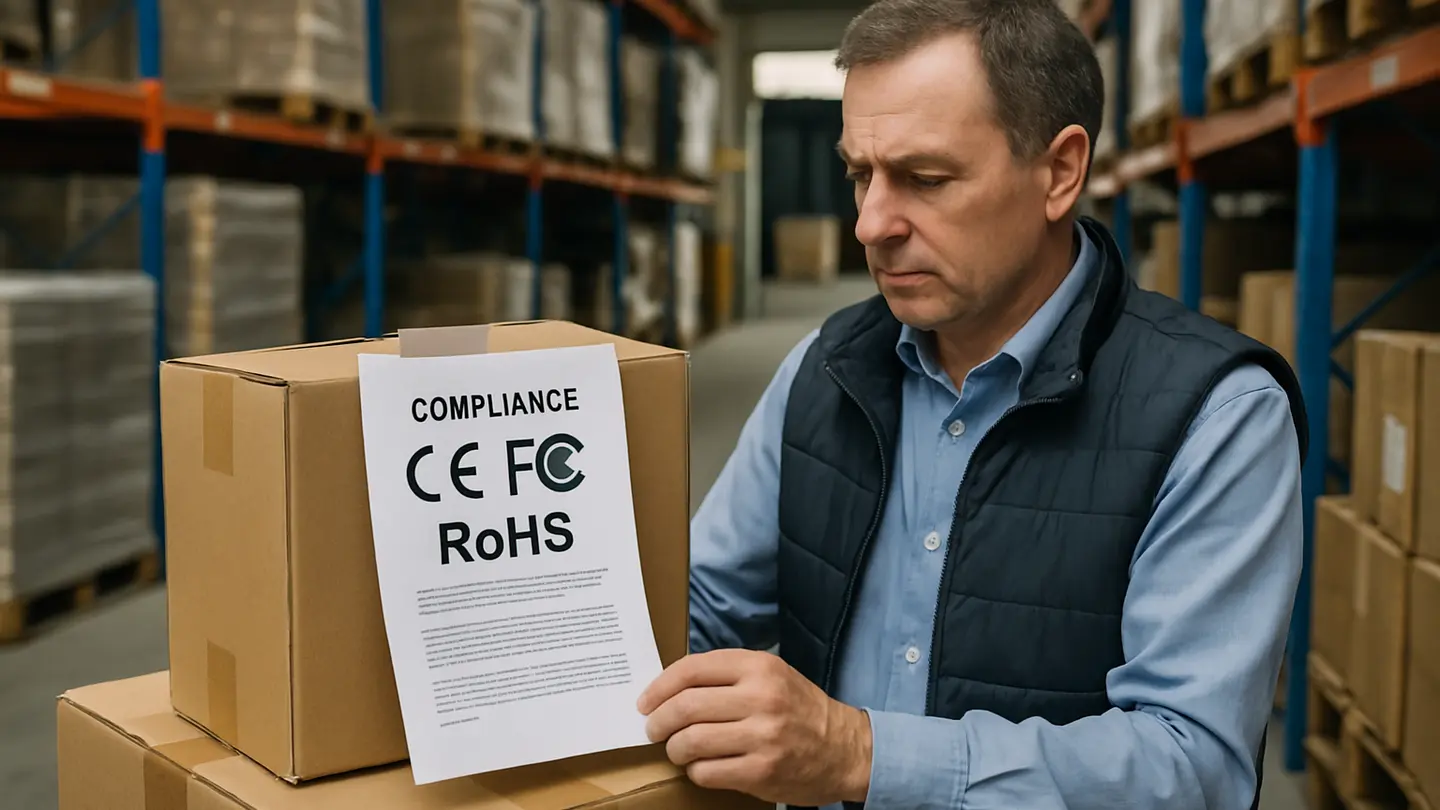
Certificate images on a listing should not be accepted without verification. They may not apply to the exact product model, could be expired, or may not be valid for the buyer’s target market. Request certificate numbers and supporting documents, then verify them with the issuing body before relying on them for import, sale, or compliance decisions.
Conclusion: Choose Based on Your Buying Stage
Alibaba and AliExpress serve different buying stages rather than replacing one another.
AliExpress is generally useful for low-volume purchases, quick product tests, and limited demand validation. Alibaba is better suited to bulk purchasing, private labeling, customization, and building a repeatable supply arrangement.
For buyers sourcing shower products, the choice should reflect the commercial objective. A small retail test may be enough to assess appearance and customer interest. A larger inventory order requires more discipline: supplier vetting, fresh sample approval, written specifications, packaging confirmation, and a clear understanding of landed cost.
The right platform is the one that supports the buyer’s current order volume, margin requirements, and level of sourcing control.
About the Author
Maple Sourcing provides sourcing-related information for businesses evaluating suppliers, product development options, purchasing risks, and international procurement processes. Its sourcing guidance focuses on practical buyer considerations such as supplier assessment, sample approval, quality control, shipping coordination, and documented purchasing requirements.